Compliance & Ethics

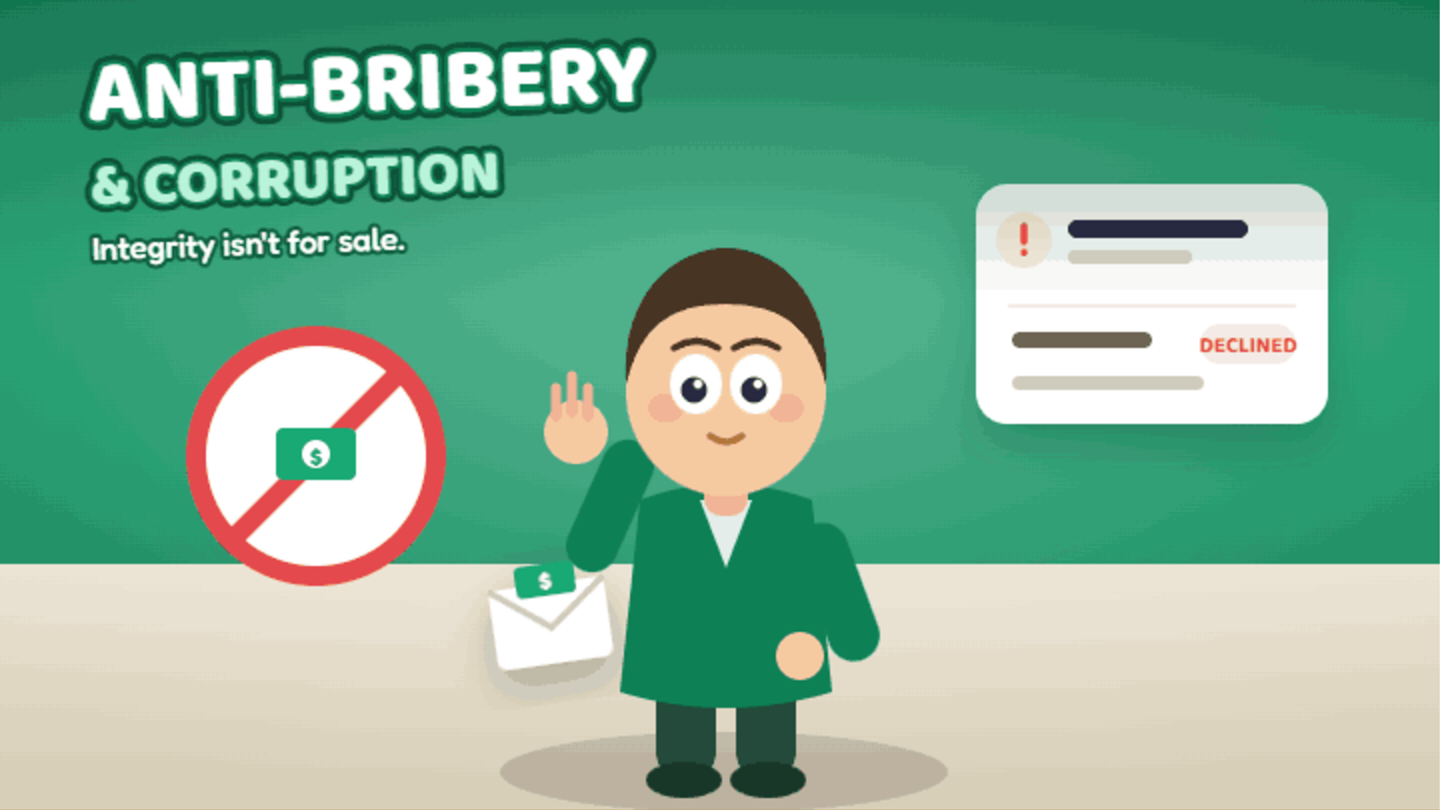
Anti-Bribery & Anti-Corruption

Promoting Integrity and Ethical Business Practices — understand how corruption occurs, recognize warning signs, navigate global laws, and build a culture of accountability at every level of your organisation. ✦ Part of the MyPass LMS course library — get the LMS, get access to all courses instantly

4.8(1,243 ratings)
6,820learners
1h 15m
Updated May 2025
Top rated
Compliance-ready
1h 15m
9 sections
Course Preview — Anti-Bribery & Anti-Corruption
What you'll learn
Define corruption and distinguish all four forms — bribery, embezzlement, nepotism, facilitation payments
Understand how corruption normalizes through institutionalization, rationalization, and socialization
Recognize financial, behavioral, and procurement red flags in your organization
Navigate major global anti-corruption laws — FCPA, UK Bribery Act, India PCA, Australia Criminal Code
Assess the economic and social costs of corruption on markets, communities, and public trust
Understand legal consequences for individuals and organizations involved in misconduct
Apply practical prevention measures and report concerns through proper internal channels
Build a personal commitment to ethical conduct and integrity in daily business decisions
9
Course sections
25
Lessons
1h 15m
Total duration
9
Knowledge checks
9 sections · 25 lessons · 1h 15m total length Click any section to expand
1
Introduction
2 lessons · 8 min
Course Introduction — Anti-Bribery & Anti-Corruption Training 4 minPreview
Why Anti-Corruption Matters — Consequences and Culture 4 min
2
Understanding Corruption
2 lessons · 7 min
What is Corruption? — Definition and Context 4 min
Small-Scale vs Large-Scale Corruption 3 min
3
Forms of Corruption
5 lessons · 18 min
Bribery — Definition, Examples, and Risk Indicators 5 min
Scenario — Construction Company Bribery Risk 3 min
Embezzlement — Misuse of Entrusted Resources 4 min
Nepotism — Unfair Advantages in Hiring and Contracts 3 min
Facilitation Payments — Small Payments, Big Risks 3 min
4
How Corruption Becomes Normalized
4 lessons · 16 min
When Corruption Becomes Part of the Culture 4 min
Institutionalization of Corruption 4 min
Rationalization — How Employees Justify Misconduct 4 min
Socialization — Learning Unethical Behaviour from Colleagues 4 min
5
Economic and Social Costs of Corruption
3 lessons · 9 min
Economic Impact — Investment, Competition, and Growth 3 min
Impact on Organizations — Trust, Penalties, and Reputation 3 min
Impact on Society — Inequality, Services, and Public Trust 3 min
6
Global Anti-Corruption Laws
2 lessons · 7 min
International Laws — FCPA, UK Bribery Act, India PCA, Australia Criminal Code 4 min
Global Reach — Cross-Border Prosecution Explained 3 min
7
Legal Consequences of Corruption
2 lessons · 6 min
Consequences for Individuals — Criminal Prosecution and Career Impact 3 min
Consequences for Organizations — Penalties and Business Restrictions 3 min
8
Recognizing Red Flags
3 lessons · 9 min
Financial Red Flags — Unusual Payments and Transactions 3 min
Behavioral Red Flags — Employee Conduct and Secrecy 3 min
Procurement Red Flags — Contracts and Vendor Patterns 3 min
9
Reporting and Preventing Corruption
3 lessons · 9 min
Reporting Concerns — Channels, Confidentiality, and Steps 3 min
Preventing Corruption — Policies, Training, and Monitoring 3 min
Key Takeaways — Building a Culture of Integrity 3 min
About this course

In today's global business environment, organisations operate across multiple countries, regulatory environments, and cultures. While this creates opportunities for growth, it also introduces serious ethical and legal risks — and one of the most damaging is corruption.

This course provides a structured, practical understanding of anti-bribery and anti-corruption principles designed for employees at every level. It covers not just what corruption is, but how it develops, how to recognize it, how to report it, and how to prevent it from taking hold in your workplace culture.

You will learn to identify the four main forms of corruption — bribery, embezzlement, nepotism, and facilitation payments — through real-world scenarios drawn directly from the course material. You will understand the psychological and organisational processes through which corruption becomes normalized over time: institutionalization, rationalization, and socialization.

The course covers key global anti-corruption legislation including the US Foreign Corrupt Practices Act, the UK Bribery Act, India's Prevention of Corruption Act, and Australia's Criminal Code — and explains how these laws can apply to organisations operating internationally.

You will also develop practical skills in recognizing financial, behavioral, and procurement red flags, and understand the correct channels and procedures for reporting suspected misconduct within your organisation.

Course rating
4.8
Course rating
5 ★
72%
4 ★
20%
3 ★
6%
2 ★
1%
1 ★
1%
1,243
total ratings